


Erectile Dysfunction can be challenging for same sex couples, especially when your partner has no issues getting an erection. Moreover, your normal sexual preferences may need reviewing if one of you are having issues.
Whilst there are lots of options it’s always wise to make sure you are using the most appropriate device and equally that you’re taking the most appropriate medication. Our team of pharmacists often work with same sex couples and acknowledge that whilst the physiology is the same, sometimes the challenges are different. We are only too happy and very much comfortable with helping you navigate the options as to what may be appropriate for you and/or your partner to try.
We know that men’s health troubles (in all their forms) often fall into the ‘too hard basket’ when it comes to discussing it with a Doctor because we hear things like:
- “I don’t want to make them feel uncomfortable”
- “I don’t know how to start the conversation”
- “I’m LGBTQI and I don’t really want to discuss it or be judged”
- “Its only ED and not a serious medical condition – they’ll think I’m wasting their time”
- “I can live with it for now, I’ll wait”
- “It is what it is and I don’t know that there is much that can be done”
- “I don’t really want them poking and prodding around down there”
- and perhaps most unfortunately “My Doc is female and I just can’t”
Discussing possible options and treatment regimens and even how to navigate the heathcare system – from GP to Specialist – with one of our pharmacists breaks the ice and in part prepares and educates you so that you can be comfortable with the above questions. After you’ve had a consult with one of our pharmacists we will provide you with a referral letter for your GP. We find that this also assists in breaking down the barriers and equally helps your GP in formulating a robust plan of attack (as opposed to the “here try this and tell me if it doesn’t work” approach where you can be left feeling worse and more helpless than ever when it doesn’t).
Finally, and it may sound obvious, but don’t forget that men’s health issues such as ED affects guys of all ages, nationalities and sexual orientation so you’re definitely not alone.
Please feel free to check out the other resources on the website for more information and of course the online store and please contact us if you would like any further assistance or information
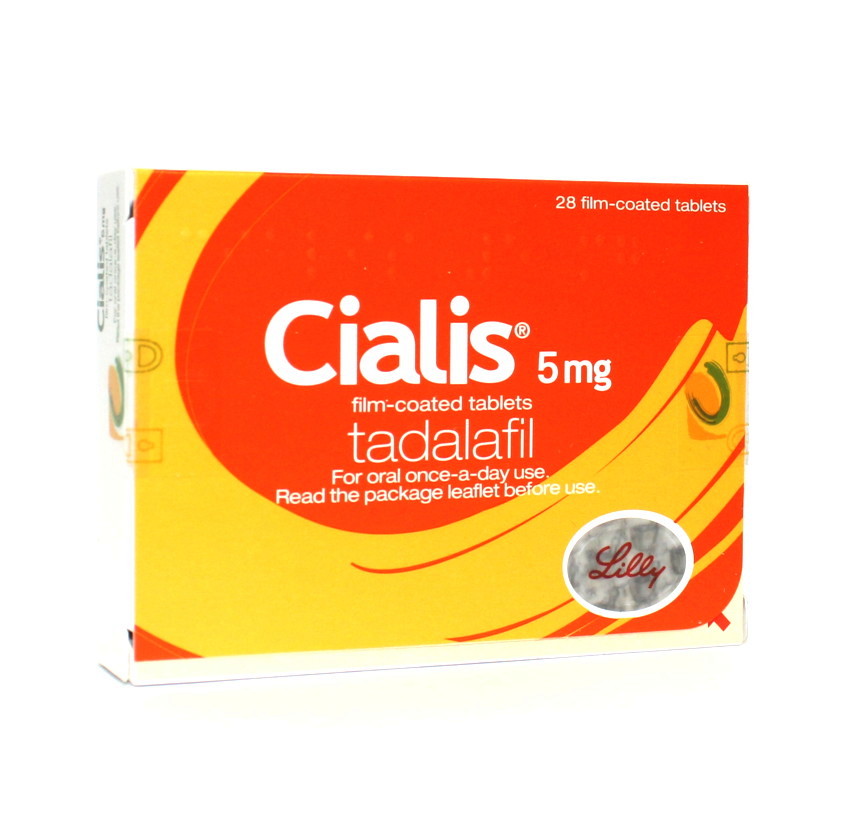
PDE5i Drug example - Cialis
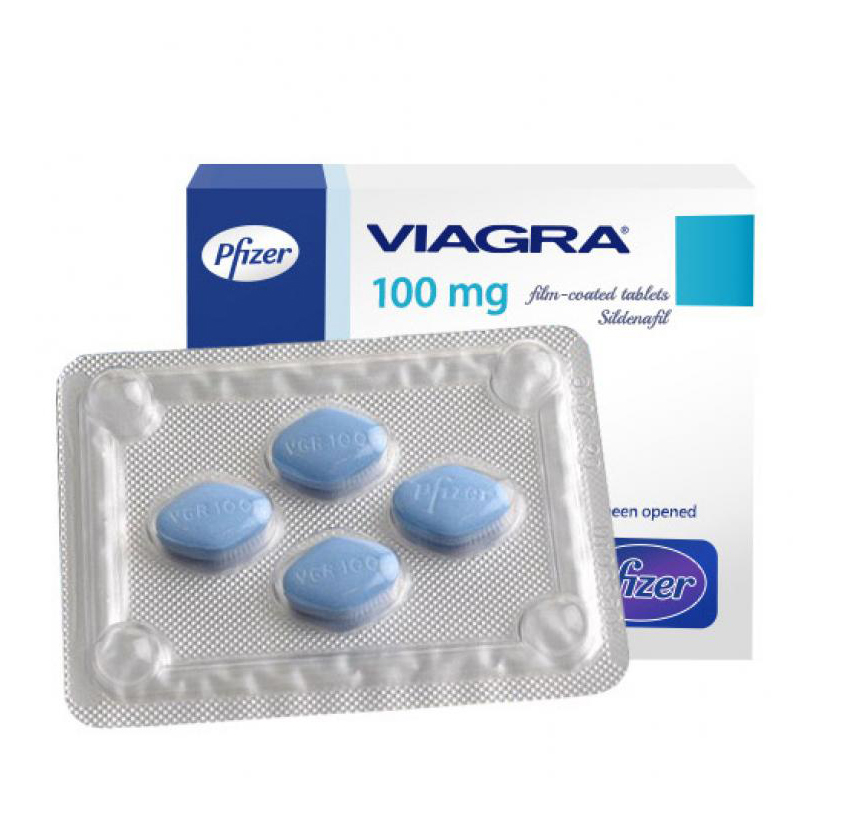
PDE5i Drug example - Viagra 100mg
<h4>Intracavernosal (penile) injections overview</h4>
<p>
Sometimes your Urologist or Doctor will prescribe ‘erection’ drugs which are to be injected into the penis (known as an intracavernosal injection). These medications are often used to bypass the oral route of administration. This can be for a number of reasons such as side effects of oral equivalents, poor outcome of oral equivalents, drug interactions, impaired blood flow and so on. Despite the fact that injections can be uncomfortable (and certainly unnatural for most patients) they are very effective and with the correct dose and technique will be reliable.
</p>
<p>
The 2 most commonly used medications for penile injection are <em>Caverject </em>(alprostadil) and <em>Trimix</em>; a mixture of 3 ingredients: alprostadil (PDE5i), phentolamine (alpha blocker), and papaverine (vasodilator)). These ingredients work by relaxing the smooth muscle and opening the blood vessels in your penis, thus leading to an erection.
</p>
<p>
<em>Caverject</em> is a propitiatory made injection (made by Pfizer) which is available at most pharmacies (some may need to order in for you);
</p>
<p>
<em>Trixmix</em> (comes in a range of strengths) is specially compounded by a sterile compounding Pharmacy and it needs to be specially ordered each time you need it. Men’s Health Downunder Pharmacists can arrange this for you - please get in touch and we will be happy to supply it to you and ensure that you know how to use it safely and effectively.
</p>
<p>
Your Urologist/Doctor will decide which medication and dose is most appropriate for you and provide you with a prescription.
</p>
<h4>Storing your medication</h4>
<p>
The alprostadil in <em>Trimix </em>can weaken over time, so <em>Trimix </em>should be stored in the refrigerator or freezer and away from light. This can keep the medication good for a few additional months. If you’re using <em>Caverject </em>the unused syringes can simply be kept at room temperature.
</p>
<p>
In the case where you have been prescribed <em>Bimix </em>or papaverine alone, you can keep these medication vials at room temperature also as they do not contain the light and temperature sensitive alprostadil.
</p>
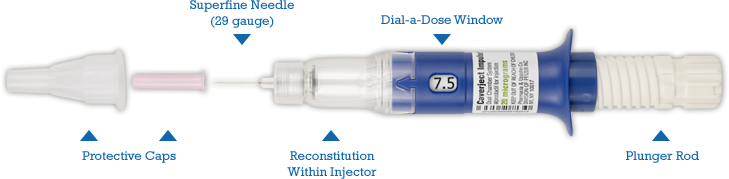
Caverject Injection Labelled
Intracavernosal injections are generally reserved for patients who do not get the desired result with an oral or sub buccal PDE5i (eg <em>Viagra </em>or <em>Cialis</em>). They are injected into the cavernosal tissue of the penis and work quickly and reliably to give a good firm erection within 10-15 minutes. The main concern expressed by patients prescribed the injections is not surprisingly around the concept of injecting into their penis. The information below may help to demystify the concept of intracavernosal injection. Certainly Men’s Health Downunder is here to assist all men with any questions or support that they may need so don’t hesitate to contact us if you need support.
In summary, there are 2 main intracavernosal injections we use; that being <em>Caverject </em>which is available on a prescription from most pharmacies (ie a proprietary product) and Trimix (which we have specially compounded in accordance with your Doctor’s prescription) - there are many formulations/strengths of Trimix and again, as with the sub buccal lozenges, these recipes can be accessed by your Doctor in the practitioner section of our website; generally intracavernosal injections contain a PDE5i - most commonly alprostadil. It is worth noting that you may use the medication for intracavernosal injection up to twice a week (you should not use 2 injections within 3 days - and not more than 8 times in a month)
The goal is to induce an erection lasting 30-60 minutes – this can require some dose adjustment; the Pharmacist or Doctor can advise on this dose adjustment to ensure that you are able to find the best dose for you, noting that everyone will be different.
The erection will hopefully not last more than two hours, however if it does this is ok, just not desirable from a patient point of view. However when it lasts more than 3-4 hours it is called priapism and you should seek help as detailed in the ‘Priapism fact sheet’ below. Priapism can damage the penis and must be dealt with as soon as possible.
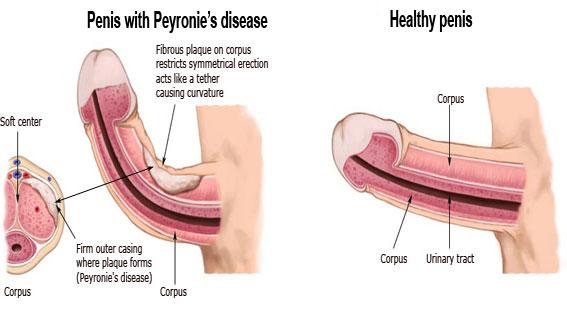
It is also worth noting that if the penis starts to bend/change shape it may be a side effect of the injections. If this does happen stop using the intracavernosal injections and seek advice from your Urologist/Doctor/Pharmacist. This is known as Peyronie’s disease and again is not desirable and needs to be managed by a healthcare professional. Similarly, if you have Peyronie’s disease you should not use intracavernosal injections.
Incorrect technique may result in a partial erection or no erection. It does not cause any harm. You can try again on a different day if this occurs and if you are unsure if your technique is correct check with your Pharmacist or Doctor. Inappropriate technique is the greatest cause of a failed injection and should be easily corrected with a little bit of education by the Pharmacist. Men’s Health Downunder pharmacists are all specially trained to assist you with your technique. Contact us should you need any assistance.
When using intracavernosal injections it is always wise to avoid alcohol as alcohol may counteract their effect resulting with no, or only a limited, unsatisfactory response. Alcohol may have this effect with any medication used for erectile dysfunction (tablets or injections) and as a general rule should be avoided.
To achieve the best response, you should be relaxed, sexually aroused (either from contact with a partner or from self-stimulation) and not overly tired; this is easier said than done so try your best
The erection can be uncomfortable and should this occur simple analgesic is appropriate - eg <em>Panadol </em>– for more information see the ‘Priapism factsheet’
If you find the injection painful local application of an anaesthetic cream may be appropriate; we would typically use <em>Emla</em> or <i>Numbit 5% </i>which should be applied an hour before and covered with a little spot bandaid - ask us for further advice
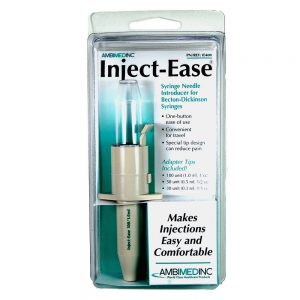
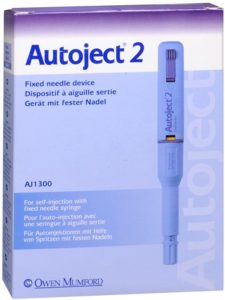
Finally some patients prefer to use a device called <em>Inject Ease</em> or <em>Autoject </em>to assist them with injection of <em>Trimix</em>; this is not appropriate for use with <em>Caverject</em> but may make the process of injecting with the insulin style syringe more comfortable. Your Men’s Health Downunder Pharmacist should be able to supply you with and explain how to use the <em>Inject Ease </em>or <em>Autoject </em>device
<p>The below instructions are to assist patients or their carers to administer an intracavernosal injection.</p>
<p>Do not use the medication if it has particles or is cloudy. Equally do not use if the rubber stopper comes off of the vial</p>
<h4>Preparing the injection</h4>
<ol>
<li>Prepare a clean surface for your supplies.</li>
<li>Gather your supplies including: medication vial; syringe (one-time use only); alcohol wipes; sharps container</li>
<li>In the case of <i>Caverject Impusle</i> follow the instructions or video given to you</li>
<li>Wash your hands well with soap and water</li>
</ol>
<h4>Drawing up the medication from the vial</h4>
<ol>
<li>Open an alcohol wipe and wipe the rubber stopper on the top of the vial. You must always wipe the rubber stopper with alcohol before you insert the needle. This will kill any bacteria on the rubber stopper</li>
<li>Take out the syringe, remove the cap from the needle. Be very careful not to let anything touch the needle. If anything touches the needle, you must throw the entire syringe away in the sharps container and use a new one as it will no longer be sterile</li>
<li>First, holding the syringe upright so the needle faces the sky, pull the plunger of the syringe back past the dose you were told to inject. Next, push the plunger back up until the top of the plunger (the thin black line closest to the needle) is at the dose you were told to inject</li>
<li>Turn the syringe downward so the needle is facing the floor. Hold the syringe in your hand like you hold a pen or dart. Hold the syringe close to the needle with your thumb, index (first) and middle (second) fingers. This will keep the needle from bending as you insert it into the rubber stopper. Support the medication vial with your other hand</li>
<li>Holding the vial upright and the syringe downward, insert the needle through the circle in the center of the rubber stopper. Push the plunger down to inject the air into the vial (see Figure 1). You do this because the vial is pressurized. You must replace the amount of medication you remove from the vial with air</li>
<li>Turn the vial and syringe upside down (see Figure 2). Hold the syringe with the hand you use to write with and the vial with your other hand. Don’t let go of the vial, or the needle will bend. Make sure the tip of the needle is in the medication. Rotate the syringe so you’re looking at the numbers and lines on the syringe</li>
</ol>
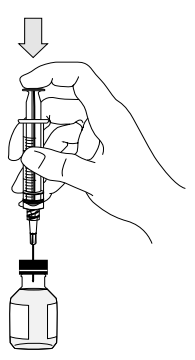
Figure 1. Injecting air into the vial
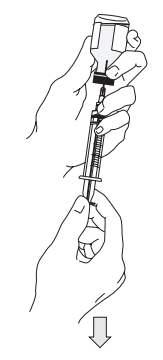
Figure 2. Withdrawing the medication
<ol start="7">
<li>Pull the plunger down past your prescribed dose. This will help remove any air bubbles. Slowly push the plunger back up to your prescribed dose. Check the amount of medication in the syringe to make sure it’s the correct dose</li>
<li>Check for air bubbles in the syringe. If you see any air bubbles, pull more medication into the syringe. They will go to the top, towards the needle. Slowly push the air bubbles and the extra medication back into the vial. Look at the syringe again to make sure that you have the right amount of medication</li>
<li>When you have the correct amount, pull the needle out of the vial. Place the cap back on the syringe without touching or bending the needle. If you touch or bend the needle, you will need to throw away the syringe and start at step 2. When you place the cap back on the syringe, make sure you don’t push the plunger by accident. This will push the medication into the cap and result in the wrong amount when it’s time to inject yourself</li>
<li>If you’re using Trimix, put the medication vial back into the refrigerator. If you’re using Bimix or Papaverine, you don’t need to keep your medication in the refrigerator</li>
</ol>
<h4>Choosing an injection site</h4>
<p>You must inject the medication into a specific area of your penis. This is so you don’t inject into a nerve or blood vessel</p>
<p>Imagine that your penis is divided in 3 parts. You will give the injection in the middle third of your penis at the 10 o’clock (left side) or the 2 o’clock (right side) position (see Figure 3)</p>
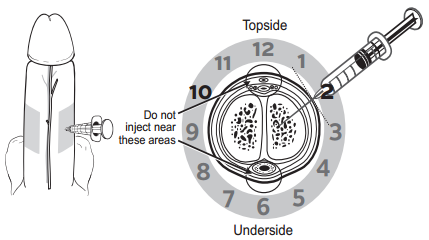
Figure 3. Choosing an injection site
<p>
To prevent trauma to your penile tissue, always change sides of your penis each time you inject the medication (right side, then left side). Keep a record each time so you don’t forget. Don’t inject into any vein you can see or feel because it could cause a large bruise on your penis. Don’t inject straight down on the top or the bottom of your penis.
</p>
<h4>Injecting the medication</h4>
<ol>
<li>Grasp the head of your penis, not the skin. This will allow your penis to be more fully stretched. It’s easiest to inject if your penis is pulled straight out in front of you. If you aren’t circumcised, pull your foreskin back before grasping the head of your penis. This will prevent the needle from going between the skin and cavernosal tissue. For your injection to work, the medication needs to go into the cavernosal tissue</li>
<li>Locate the area to be injected (the middle third of your penis). Wipe it with an alcohol wipe. Let go of the head of your penis and pick up the syringe with 2 hands</li>
<li>Remove the cap covering the needle. Look at the syringe to make sure the dose is correct and you haven’t pushed any medication out by accident</li>
<li>Hold the syringe between your thumb, index and middle fingers like a pen or a dart. The needle should be facing the floor. Don’t place your index finger or thumb on the plunger</li>
<li>Once again, grasp the head of your penis and pull it straight out. Keep pulling on your penis from the time the needle goes into your penis until it comes out. Don’t twist your penis as this could lead to injecting the wrong area</li>
<li>Touch the needle to your skin then allow it to slide into the shaft of your penis. Remember to avoid any veins. Make sure to insert the needle at a slight angle (either the 10 o’clock or 2 o’clock position, as shown in Figure 3)</li>
<li>Move your finger so that your index finger or thumb can push in the plunger</li>
<li>Push down on the plunger to inject the medication into the shaft of your penis. Be careful not to pull the syringe out as you’re injecting the medication</li>
<li>Once you have injected all of the medication, quickly pull the needle straight out of your penis. Pull it straight out. Don’t use a twisting or jerking motion because this may cause bruising. Apply pressure at the injection for 30 seconds (slightly longer if you are on a blood thinner as this will help to decrease any bleeding or bruising) then massage the penis from the base to the tip approximately 5-10 times; The penis should become erect (with the assistance of foreplay) in 5-20 minutes</li>
<li>Place the syringe in the sharps container. You don’t need to recap it</li>
</ol>
Research shows that vacuum therapy is highly beneficial as a method of rehabilitation therapy after radical prostatectomy.
The goal of penile rehabilitation therapy after radical prostatectomy is to get good regular blood flow into the penis; this aids in preventing atrophy (death of the cells/tissue of the penis). Beyond this you tend to find that regular use of the pump will also increase the length of the penis (noting a shortened penis post surgery) and to maximize erectile function so that a spontaneous erection can be produced.
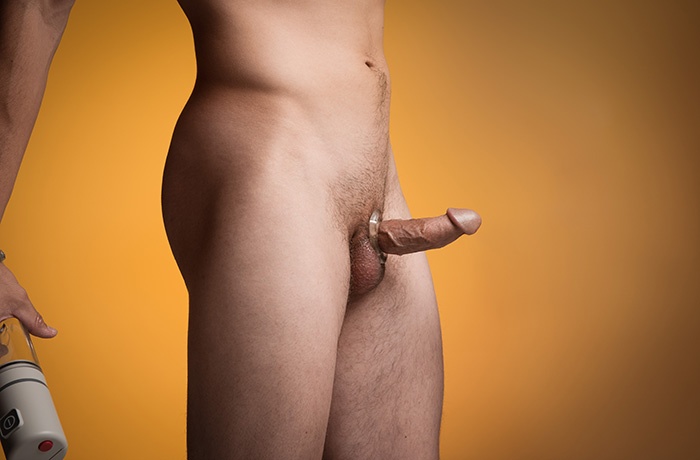
The vacuum therapy device does this by creating negative pressure around the penis, thereby increasing blood flow to the penis. When used as a <u>treatment</u>, the penile tube is placed over the penis, and the vacuum suction is applied and the erection induced. Once the erection is achieved, the silicone constriction band is placed around the base of the penis and this will hold the erection in place.
When using vacuum therapy for <u>rehabilitation therapy</u> it works in much the same way, except without the constriction ring. The negative pressure is applied to increase blood flow to the penis. However, the ring is not used because it prevents venous outflow. Using vacuum therapy without the ring helps stimulate oxygenated blood flow, which can reduce the fibrotic changes that can occur after a radical prostatectomy.
We feel that it is important that patients invest in a quality, medical-grade pump designed for therapeutic use. It’s important at this juncture not to buy a “toy†or “novelty†pump, but to look for a quality instrument, backed by a solid reputation.
<h4>Sample routine</h4>
When using vacuum therapy as penile rehabilitation, the goal is to get blood to the penis and improve blood flow; this in turn helps to repair and maintain the penile tissue. In a typical session this involves the following steps:
<ol>
<li>Apply the vacuum suction and draw blood into the penis (you may need to lightly shave around the base of the penis and further may wish to use a little water based lubricant)</li>
<li>Leave the penis fully engorged in the pump for 5 minutes</li>
<li>Remove the pump and let the penis return to flaccid for 1 to 2 minutes</li>
<li>Repeat the vacuum suction and hold the erection for another 5 minutes. This should be done 2-3 times in a row. Alternatively you may wish to simply leave the pump over the penis for 10-15 minutes</li>
</ol>
Doing this repeatedly can increase blood flow, decrease swelling, and increase lactate and oxygen exchange.
<h4>Rehabilitation tips</h4>
<ul>
<li>Wait two full weeks after your catheter is removed before beginning rehabilitation</li>
<li>Be patient, be patient and be persistent. It is common to not get full engorgement for some days or weeks so don’t be dismayed and try not to become frustrated; this is normal and will improve with time</li>
<li>Give yourself time to get familiar again with the sensation of being engorged. To do this, some men prefer to activate the pump for 30 seconds, and then rest for 30 seconds before activating the pump again; initially when starting your rehabilitation this ‘on/off’ process may be a gentle way to become acquainted with the process</li>
</ul>
<h4>Step by Step Vacuum Therapy</h4>
-
<div class="span6">
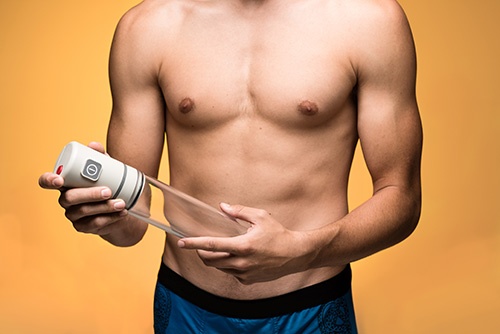
<h2>Step 1:</h2>
<p>Attach the pump head to the penile tube. The pump head will look different depending on whether it’s with a manual or battery operated system.</p>
</div> -
<div class="span6">
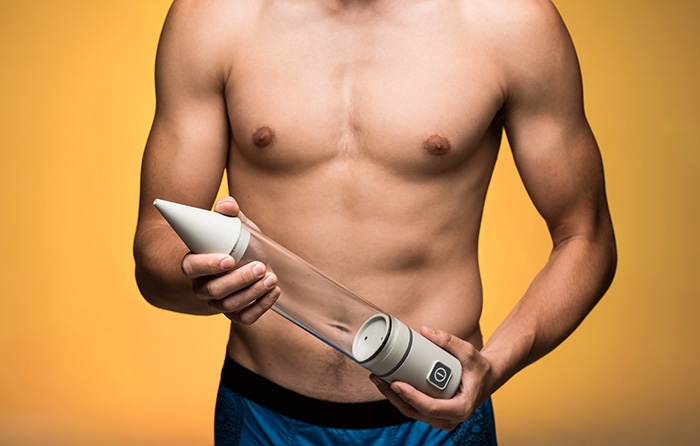
<h2>Step 2:</h2>
<p>Place the loading cone on the other end of the penile tube</p>
</div> -
<div class="span6">
<div class="span6">
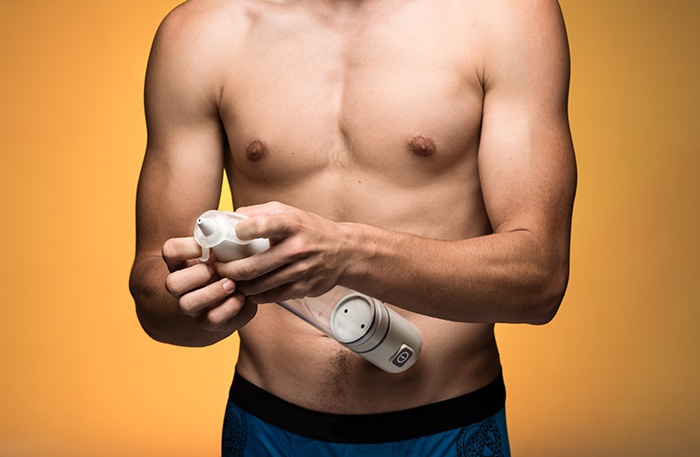
<h2>Step 3:</h2>
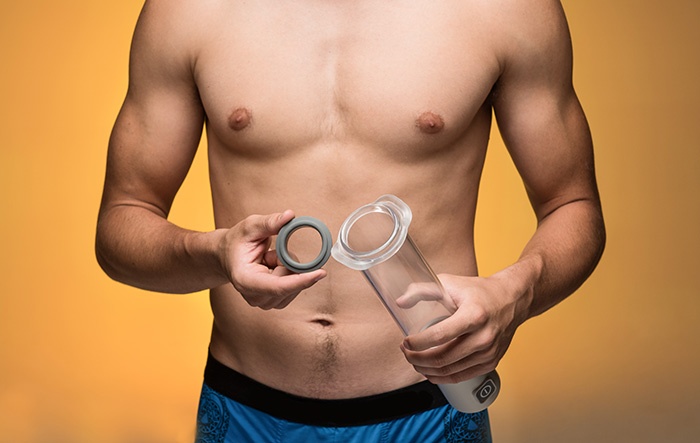
<p>Slide a tension ring over the top of the cone and down just past the base of the cone, on to the edge of the penile tube.</p>
<p>For your first time, we recommend using the tension ring size that’s in the middle. If the ring is too tight, you can move up to a larger size. And if your erection doesn’t last as long as you’d like, you can move down to a smaller size.</p>
<p>To slide the tension ring down to the base of the cone, place the middle ring over the top of the cone and use the two handles to move downward. Feel free to use lubricant if you need to.</p>
</div>
</div> -
<div class="span6">
<div class="span6">
<div class="span6">
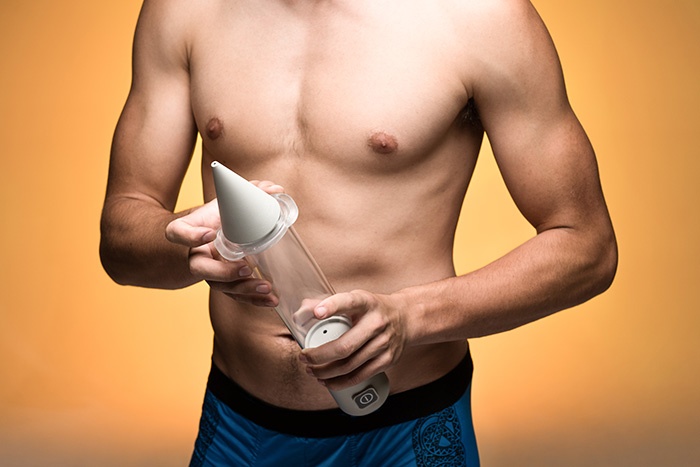
<h2>Step 4:</h2>
<p>Once the tension ring is securely on the penile tube, remove the cone.</p>
</div>
</div>
</div> -
<div class="span6">
<div class="span6">
<div class="span6">
<h2>Step 5:</h2>
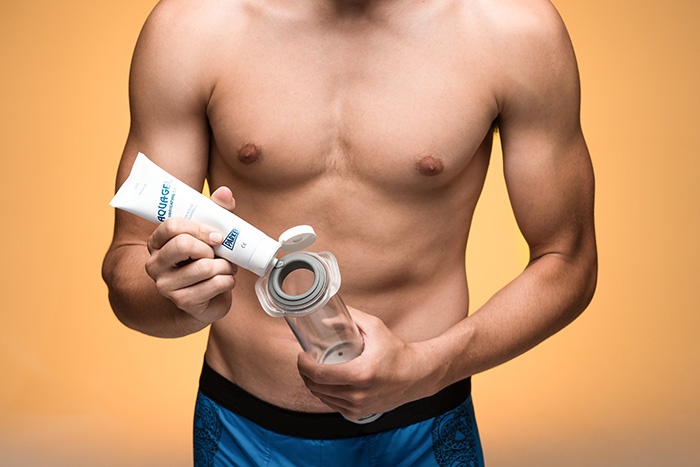
<p>Insert the bushing into the same end of the tube where you just removed the cone.</p>
</div>
</div>
</div> -
<div class="span6">
<div class="span6">
<h2>Step 6:</h2>
<p>Apply lubricant to the bushing, the inside of the penile tube and the pubic area.</p>
</div>
</div> -
<div class="span6">
<div class="span6">
<div class="span6">
<h2>Step 7:</h2>
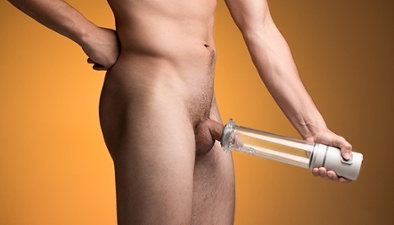
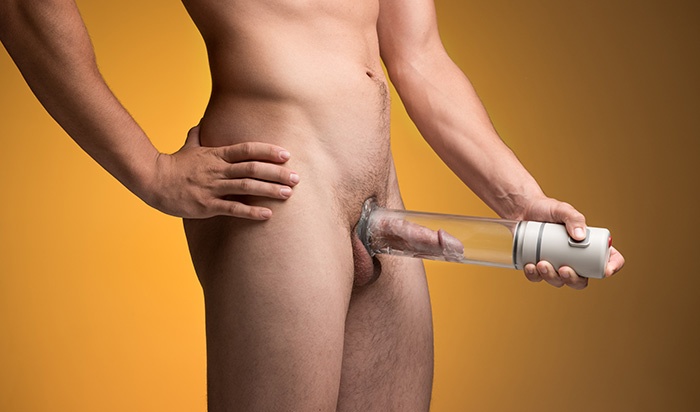
<p>Place the lube-side end of the penile tube over your penis, being sure to hold the tube firmly to create a tight seal against your body.</p>
</div>
</div>
</div> -
<div class="span6">
<div class="span6">
<div class="span6">
<div class="span6">
<h2>Step 8:</h2>
<p>Begin engaging the pump. For motor systems, you’ll press the red button. For manual systems, you’ll pull the handle. In both cases, the pump will begin drawing blood into your penis, forming an erection.</p>
</div>
</div>
</div>
</div> -
<div class="span6">
<div class="span6">
<div class="span6">
<div class="span6">
<div class="span6">
<h2>Step 9:</h2>
<p>Once you’ve achieved the desired erection, slip the tension ring off the end of the penile tube and on to the base of your penis.</p>
<h2>Step 10:</h2>
<p>You now have a firm erection that will last for 30 minutes!</p>
</div>
</div>
</div>
</div>
</div>
<p>
There are a number of what we call ‘other’ ejaculatuion issues that men can encounter. These may include:
</p>
<ul>
<li>Retrograde ejaculation</li>
<li>Delayed ejaculation</li>
<li>Painful ejaculation</li>
</ul>
<p>
These are described briefly as below:
</p>
<ul>
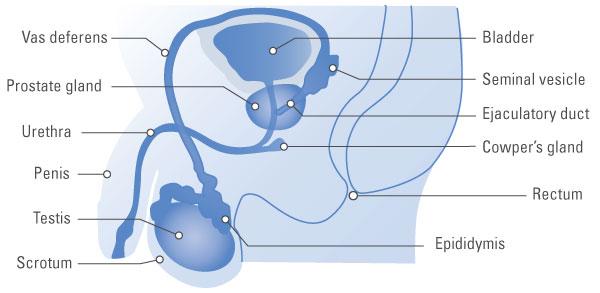
<li>Retrograde ejaculation - occurs when the muscle at the opening of the bladder does not close normally. When the muscle does not close properly semen flows back into the bladder meaning, little or no semen is discharged from the penis during ejaculation, and the first urination after sex looks cloudy as the semen has mixed with the urine. Retrograde ejaculation is uncommon and usually harmless and can be a side effect of a number of medications; particularly those used to treat benign prostatic hyperplasia (aka BPH) and those for high blood pressure; and health conditions such as diabetes, multiple sclerosis, and spinal cord injury</li>
<li>Delayed ejactulation - sometimes referred to as anorgasmia (the complete inability to ejaculate) are the terms used describe the inability to ejaculate at will. Interestingly “orgasm†and “ejaculation†are often thought to be the same, but some men can experience orgasm even though they don’t ejaculate and this is common after prostate surgery. Other causes can include spinal cord injury, major lymph node surgery, diabetes, multiple sclerosis and traumatic injury to the pelvic region where the nerve supply is affected. Medications can also be implicated and the most common of these are the SSRI antidepressants (also of note is that for premature ejaculation one of the Doctor may prescribe could be a SSRI’s at low dose)</li>
<li>Painful ejaculation - occurs when painful, burning sensations are felt during or following ejaculation. During ejaculation, pain can be felt in the perineum (the area between the anus and the genitals) and the urethra (a tube that runs from the bladder to the end of the penis). The condition can cause discomfort in the testes and interfere with sexual pleasure. Basically any condition that causes inflammation or an infection of the organs involved in ejaculation or the surrounding structures, such as prostatitis, may cause painful ejaculation. A referral the the urologist may be sort in the case of painful ejaculation</li>
</ul>
<p>
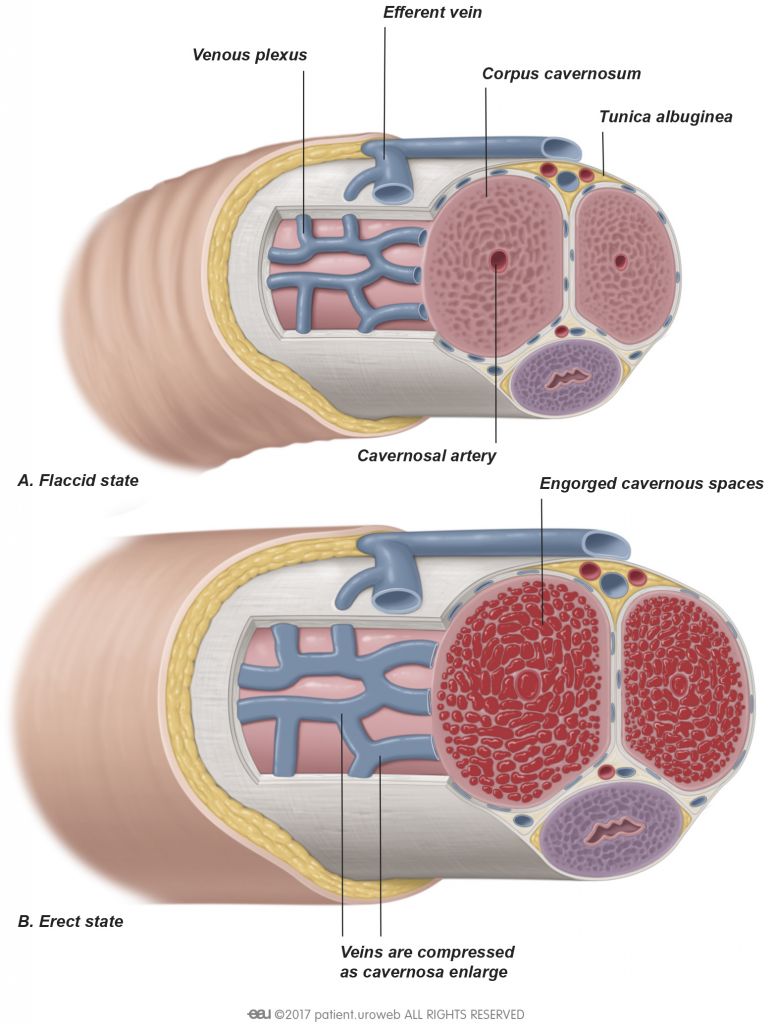
Priapism is a prolonged erection of the penis. The persistent erection referred to as priapism generally continues hours beyond the desired outcome (by definition this is at about 4 hours). Priapism is usually painful.
</p>
<p>
Priapism symptoms vary depending on the type of priapism. The two main types of priapism are ischemic and nonischemic priapism. As ischemic priapism is the most common form we will discuss it below. Nonischemic priapism generally occurs as a result of trauma and require the assistance of the Emergency Department of the local hospital.
</p>
<h4>Ischemic priapism</h4>
<p>
Ischemic priapism, also called low-flow priapism, is the result of blood not being able to leave the penis. It's the more common type of priapism. Signs and symptoms include: Erection lasting more than four hours or unrelated to sexual interest or stimulation; rigid penile shaft, but the tip of penis (glans) is soft; progressive penile pain. This is the type of priapism one may experience with intracavernosal injections such as <i>Caverject </i>or <i>Trimix </i>which you may have been prescribed.
</p>
<h4>What you can do at home</h4>
<p>
In the case of a very painful erection or an erection that is becoming prolonged (your definition of this may vary but as a rule perhaps greater than an hour) you can take the following measures to both reduce the pain and assist the outflow of blood from the penis:
</p>
<ol>
<li>Take simple analgesia - paracetamol tends to work reasonably well for pain management at the recommended dose</li>
<li>Cold compression/ice pack/frozen peas - this will work more quickly as it is to be applied to the penis directly. This will aid in resolving the erection</li>
<li>Take a cold shower - in a similar fashion to the ice a cold/cool shower will encourage blood flow from the erect penis.</li>
<li>Pseudoephedrine - you may know this medication is more commonly sought for cold and flu symptoms, particularly a blocked or runny nose. In this instance it will aid in the blood flow from the erect penis resolving the erection. If you are using any intracavernosal injection (<i>Trimix </i>or <i>Caverject</i>) it would be advisable to have this at home just in case. The dose is 1-2 tablets (60-120mg pseudoephedrine) and it will take 30 minutes to start to work (hence using the ice/cold shower in the first instance is a good idea). NB - in Australia pseudoephedrine is kept behind the counter at the Pharmacy so you will need to provide your photo ID to the Pharmacist to get it - ensure you get the straight pseudoephedrine product as often it comes with other ingredients not relevant to priapism.</li>
<li>Intracavernosal injection of phenylephrine - this works like the pseudoephedrine but being injected into erect penis works more quickly. Mens Health Downunder can assist with the supply of ICI phenylephrine - it will however require a prescription from your Doctor. Again we can assist your Doctor if they are unsure on what they need to prescribe.</li>
</ol>
<h4>When to seek help</h4>
<p>
If you have an erection lasting more than four hours, you need to go the the Emergency department of the nearest hospital. The Emergency department staff are very understanding, discrete and professional and the generally with only a short wait (the Emergency department triage priapism as a preference) the Doctor will determine the best course of action for a quick and safe result.
</p>
<h4>As a note</h4>
<p>
Alcohol, marijuana, cocaine and other illicit drug abuse can be implicated in priapism, particularly ischemic priapism; it would be wise to avoid these substances when using your intracavernosal injections to reduce the risk of ill effect.
</p>